
Mercy Ships: The Vision, the Vessels, and the Verifiable Impact
Title: Mercy Ships' Record Haul: A Beacon of Hope in a World Desperate for Healing
Okay, folks, buckle up, because I've got some news that's genuinely making my week, maybe even my month. We're talking about Mercy Ships, that incredible organization that brings state-of-the-art medical care to some of the most underserved populations on the planet, and they're on track for a record-breaking fundraising year. I mean, seriously, in a world constantly bombarded with bad news, this is the kind of story that reminds you why humanity still has a shot.
They're projecting to blow past their previous fundraising records, potentially hitting $2.5 million in donations this year alone. And get this: it's all thanks to the maritime community rallying together for Cargo Day. Think about it – shipping companies, brokers, even shipbuilders, all pooling their resources to fund life-changing surgeries and medical training programs in Africa. It’s like a global village raising a barn, only instead of a barn, it’s a hospital ship brimming with hope.
A Rising Tide Lifts All Ships...Literally
Cargo Day, the brainchild of the late Tim Webb, started as a simple idea: donate a portion of freight commissions to Mercy Ships. But it's exploded into something far bigger, encompassing the entire maritime industry. That's what I call organic growth—a testament to the power of a good idea and the willingness of people to do good. What started as a tanker market initiative has expanded across dry bulk, shipowners, shipbuilders, terminals, agents, suppliers, and service providers. Many of whom now run their own fundraisers or pledge fixed amounts.
And the impact? We're talking about thousands of free surgeries each year – cataract removals, cleft lip repairs, complex orthopedic procedures. But here's the kicker: it's not just about immediate relief. Mercy Ships also invests heavily in training local healthcare professionals, building sustainable medical capacity for the long haul. This isn't just a handout; it's a hand up. I first heard about their work a few years back, and I honestly thought it was too good to be true. I mean, free surgeries on a floating hospital? It sounded like something out of a science fiction novel. But it's real, and it's spectacular.
And speaking of spectacular, they're not just resting on their laurels. They're building a second purpose-built hospital ship, the Africa Mercy II. The steel cutting ceremony just took place in October, marking the official start of construction. Steel cut for Mercy Ships second new purpose-built hospital ship - DredgeWire This behemoth will be 174 meters long, with 12 decks, and will house six operating rooms, nearly 100 acute care beds, and accommodations for over 600 volunteers. It's practically a floating city of healing.
This reminds me of the construction of the Panama Canal – a massive undertaking that required international collaboration and cutting-edge engineering. Except instead of connecting oceans, the Africa Mercy II will be connecting people to life-saving medical care. It’s a bold undertaking, but that's precisely what makes it so inspiring.
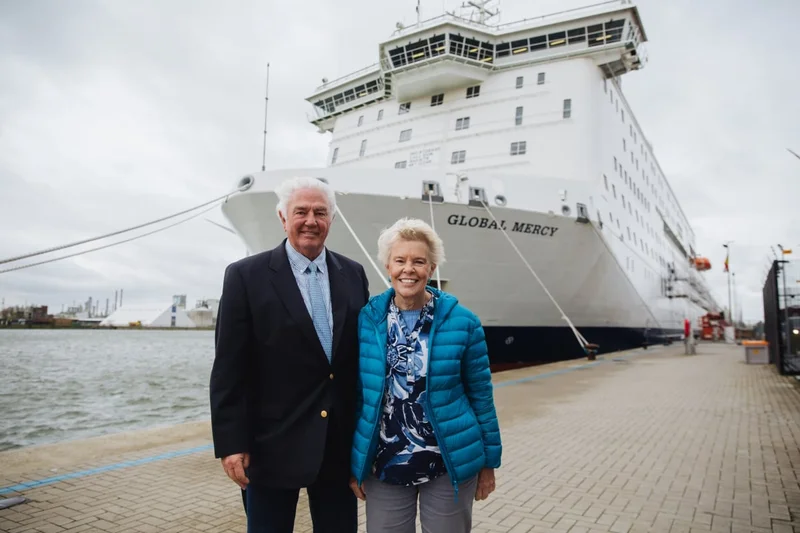
The Africa Mercy II is based on the same design as the Global Mercy, which was delivered in 2021. Think of them as sister ships, twins working together to heal the world. The current Africa Mercy, a converted ferry built in 1980, has been serving since 2007, and while it's been a workhorse, the new ships will offer significantly expanded capabilities.
But here's where things get really interesting. The new ship is being built through collaboration between international experts from five continents. It’s combining world-class maritime engineering with a global humanitarian mission. It’s not just about building a ship; it’s about building bridges – bridges between nations, between industries, and between those who have and those who need.
Now, you might be asking, "Okay, Aris, this all sounds great, but what's the catch?" And that's a fair question. With any large-scale operation, there are always potential pitfalls. How do they ensure the quality of care? How do they handle ethical considerations in different cultural contexts? How do they prevent mission creep and stay focused on their core mission? These are all valid questions, and they deserve careful consideration.
But here's the thing: the fact that these questions can be asked, that we are having this conversation, is a sign of progress. It means we're holding ourselves to a higher standard. It means we're not just blindly accepting good intentions; we're demanding accountability and transparency. And that's a good thing, because it forces organizations like Mercy Ships to constantly improve and refine their operations.
What I want to know is, how can we scale this kind of collaboration? How can we replicate this model in other sectors, in other parts of the world? What if we could harness the collective power of the tech industry, or the entertainment industry, to address other pressing global challenges? Imagine the possibilities!
Humanity's Compassion is a Powerful Technology
This isn't just about ships and surgeries; it's about something far more profound. It's about empathy, compassion, and the unwavering belief that every human life has value. It's about using our collective resources and ingenuity to create a better world for everyone. This is the kind of breakthrough that reminds me why I got into this field in the first place. Let’s make sure this beacon of hope continues to shine brightly for years to come.